Why "Tone-Deaf" Kids Aren't Tone-Deaf: A Music Teacher’s Guide to Unlocking Young Voices

Every elementary music educator recognizes that sinking feeling during first-week choir placements. A bright-eyed seven-year-old walks up to the piano, eager to participate. You play a clean middle C, then an E, and invite them to sing along. Instead of matching pitch, they produce a low, gravelly drone—buzzing along on an invariant, monotone pitch around G3 or A3, completely detached from the keyboard.
Too often, well-meaning adults jump to hasty conclusions. Parents whisper apologetically, "Neither of us has a musical ear; I guess he inherited our tone-deafness." Classroom teachers may relegate the child to rhythm sticks or quietly ask them to "mouth the words" during holiday concerts.
Yet across decades in the music classroom, testing hundreds of so-called non-singers, one fact holds true: true congenital amusia affects less than two percent of the population. More than nine out of ten children labeled as "monotone" have immaculate pitch discrimination. They can instantly tell when an instrument plays out of tune or whether a bird’s chirp is higher than a dog’s bark. Their ears work brilliantly. The issue is an involuntary biomechanical trap: their vocal mechanism is physically locked in speech mode.
The Reality of the Laryngeal Lock
To understand why a child drones, we must observe how children use their voices outside the music room. On the playground, during sports, and in excited classroom conversation, children operate almost exclusively in the chest register (the modal voice). In this functional mode:
- The vocal folds remain thick, shortened, and fleshy.
- The folds oscillate across their full cross-sectional mass.
- Subglottic pressure is maintained primarily through vocal fold tension rather than disciplined breath balance.
When an untrained child attempts to sing, their brain automatically selects the only motor pathway it knows: everyday speech phonation.
What Goes Wrong in Traditional Vocal Warm-Ups
When a teacher hears a child stuck on a low note and attempts to lead them upward step-by-step (C4 – D4 – E4), the result is almost always disastrous. Asking a child stuck in heavy chest phonation to scale upward is biomechanically equivalent to asking someone to lift an anvil with locked elbows.
The inner thyroarytenoid muscles clamp down, the larynx elevates aggressively, and pitch modulation grinds to a halt within a minor third. The child strains, fails to reach the note, and quickly decides that singing is physically uncomfortable and emotionally embarrassing.
My Breakthrough with Leo: A Studio Case Study
A few years ago, a second-grader named Leo joined my preparatory choir. Leo loved music, but during our initial vocal check, he could not match a single pitch above middle C. Whenever the choir sang Twinkle, Twinkle, Little Star, Leo contributed a steady, heavy hum at the bottom of the staff. His mother pulled me aside, convinced Leo was tone-deaf and asking if he should drop choir to spare himself frustration.
During our first one-on-one session, I tested his auditory perception away from his singing voice. I played two notes on the piano: an F4 and a B5.
- "Leo, which note sounded higher?"
- Without hesitation, he pointed up: "The second one was way higher, like a squeaky mouse!"
His auditory processing was flawless. The challenge was simply rewiring his motor coordination.
I closed the piano lid completely. No scales, no sheet music, no formal expectations.
- "Leo," I whispered, "I heard there’s an owl trapped in the school attic right above our heads. Can you show me what it sounds like when it hoots way up in the rafters?"
- He looked amused, hesitated for a second, and then produced a tiny, bright, breathy sound: "Hoo-ooo!" right up on D5.
His eyes widened in shock. For the first time in his life, his vocal folds had thinned out and elongated. By switching from a singing command to an imaginative play stimulus, his brain disengaged the heavy thyroarytenoid contraction and activated the cricothyroid stretchers. In less than two seconds, his chest lock vanished.
From that single high hoot, we played a game of "vocal roller-coaster," taking that light, floating sound on a gentle downward slide ("Weee!") down toward middle C on a relaxed [u] vowel. Within three ten-minute sessions, Leo was matching pitch effortlessly across an octave and a half. Today, he sings in the middle school honors choir.
The 3-Step Protocol for Pitch Realignment
When working with children who struggle to find pitch, replace scalar warm-ups with this sequence:
- The Imaginative Octave Leap: Never start from the child's speaking pitch. Jump at least an octave above their speech comfort zone using roleplay. Ask them to imitate a tiny hungry kitten crying from the top branches of a tall pine tree, a squeaking tea kettle, or a miniature wind chime between C5 and E5. The sound must be quiet, light, and playful.
- Immediate Sensorimotor Reinforcement: When the child lands on that light, floating sound, affirm it instantly without musical jargon: "Yes! Feel how easy and airy that was?" This builds conscious awareness of the head register without triggering anxiety.
- Descending Glides (The Siren Technique): Once the light head coordination is engaged, have the child slide downward like a sled going down a snowy hill on a round, focused vowel such as [u] ("oo") or [o] ("oh"). Descending vocalises allow the thinning mechanism of the vocal folds to remain active as they enter the middle range, preventing the voice from snapping prematurely back into the heavy speech grip.
Protecting the Instrument: Recognizing Vocal Fatigue
Because children’s laryngeal structures are tiny and still developing cartilaginous and muscular framework, establishing new neuromuscular pathways is demanding. During register coordination work, a teacher must stay attuned to early signs of vocal weariness:
- Frequent throat clearing or sudden dry coughing.
- A loss of upper-register clarity, replaced by breathy raspiness.
- Straining or tilting the chin upward to force pitch.
- Physical restlessness or wandering focus.
When these cues appear, vocal production must cease immediately. Pushing through vocal fatigue reinforces compensating muscle tensions and risks vocal fold edema.
Meaningful Rest with Coloring Pages
Vocal rest does not mean the lesson has to end or lose its educational depth. In my studio, the moment a child's voice shows fatigue, we switch gears into quiet visual learning.
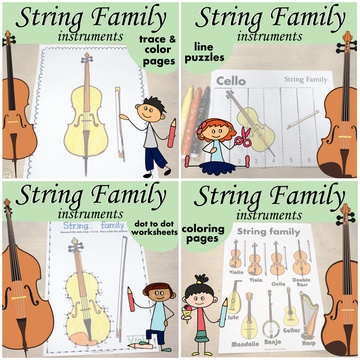
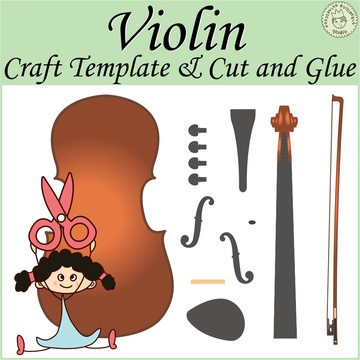
I pull out musical coloring pages, which feature orchestral instruments, rhythm patterns, key signatures, and playful musical characters. While their vocal cords enjoy complete, restorative silence, the children remain immersed in music theory, instrument identification, and artistic expression. It provides the young vocal folds a necessary recovery period while preserving the student's enthusiasm and focus.
With patience, biomechanically informed games, and mindful care for the developing instrument, every child can discover the joy of singing with freedom and accuracy.
Please note: The illustrations featured in this article were created with the assistance of AI.
Tags:
Free Printable Music Coloring Pages Free Printable Coloring Pages for Kids Musical Instruments Worksheets