Veterans Day Classroom Activities
· Updated
Top 10 Ideas for Music Classroom
Veterans Day can be a meaningful topic in the music classroom, but it needs the right tone. Students do not need a flashy activity. They need a respectful way to listen, create, and think about service, gratitude, history, and community.
Music gives you a natural path into that conversation.
Students can explore patriotic songs, marching rhythms, military band traditions, soundscapes, and simple composition projects. The goal is to help them connect sound with story. You can keep the lesson short, age-appropriate, and easy to manage, especially during a busy school week.
Here are 10 Veterans Day music classroom activities you can use with elementary students, upper elementary classes, or middle school groups.
1. Soundtrack to a Veteran’s Story
Choose a historical or local veteran story and invite students to create a short soundtrack for it.
Divide the story into a few moments:
- beginning
- challenge
- quiet reflection
- return home
- gratitude
Students can use classroom instruments to match each part. Drums might show marching or an intense moment. A soft xylophone pattern can show reflection. Shakers can create movement or background texture.
Keep the focus on mood and respect. Students do not need to “act out” war. They can show courage, teamwork, distance, memory, and thankfulness through sound.
This activity works well in small groups. Give each group one part of the story, then combine the sections into one class performance.
2. Compose a Veterans Day Sound Collage
A sound collage lets students build a short audio piece using layered sounds.
You can use a simple recording app, a digital audio workstation, or live classroom performance. Students can contribute short recordings or sound ideas:
- marching footsteps
- flag sounds
- drum patterns
- spoken words
- short melodic fragments
- quiet background tones
If you use quotes or speech excerpts, choose short, age-appropriate lines and talk about why the words matter.
This activity also works without technology. Assign small groups different sound layers and conduct the class like an ensemble. Bring one group in, add another, change the volume, then fade out.
Students learn texture, dynamics, form, and listening while creating something connected to Veterans Day.
3. Create and Decorate Veterans Day Music Memory Boxes
Music memory boxes give students a hands-on way to connect sound and meaning.
Ask students to decorate small boxes with respectful Veterans Day images, colors, words, or symbols. Inside the box, they can place items that connect to sound:
- song lyrics
- rhythm cards
- small bells or shakers
- written sound words
- a short thank-you note
- a picture of an instrument
Then students explain how the box “sounds” when opened. One student might include a soft bell for remembrance. Another might include a drum rhythm for marching. Another might add lyrics from a patriotic song.
This activity works well for centers, art integration, or a longer Veterans Day project.
4. Interactive Drumming Circle with Military Cadences
Military cadences give students a clear way to explore rhythm, steady beat, and group coordination.
Start with a simple call-and-response rhythm. Keep it short and classroom-friendly. Students can echo on hand drums, rhythm sticks, body percussion, or buckets.
Then let students create their own short cadences.
Set clear rules:
- use respectful words
- keep the rhythm steady
- listen to the group
- stop on the signal
You can connect this to the purpose of cadences: helping a group move together and stay in sync.
This is a strong activity for classes that need movement and structure at the same time.
5. Veterans Day Music History Lesson
A music history lesson works well when you keep the listening focused.
Choose one or two patriotic songs used during military ceremonies or national events. Students can listen for:
- instruments
- tempo
- mood
- repeated words
- strong rhythms
- changes in dynamics
You can also discuss where students might hear this kind of music: parades, ceremonies, school programs, sporting events, or community gatherings.
For older students, compare two recordings of the same song. Ask them which version feels more formal, more reflective, or more energetic, and have them name the musical reason.
Keep the lesson centered on listening. A few focused questions will do more than a long lecture.
6. Patriotic Song Remix Challenge
This activity works well with upper elementary or middle school students.
Choose a familiar patriotic song, such as “America the Beautiful,” and ask students to create a simple remix. They can change one musical element:
- tempo
- rhythm
- accompaniment pattern
- instrument choice
- style
- dynamics
If you use technology, students can work in a DAW or classroom music app. If you do not use devices, students can remix with classroom instruments and voices.
Set boundaries so the work stays respectful. The remix should still honor the meaning of the song.
End with a short listening share. Students can explain what they changed and why.
7. Musical Letter to a Veteran
A musical letter gives students a quiet, thoughtful way to express gratitude.
Instead of writing only words, students create a short instrumental phrase or song that represents a message to a veteran. They can use xylophones, ukuleles, recorders, keyboards, or percussion.
Give them sentence starters first:
- Thank you for...
- I hope you know...
- Your service means...
- I want to say...
Then have them turn the feeling of the sentence into music.
A thank-you phrase might sound gentle and steady. A proud message might use a stronger rhythm. A reflective message might use soft dynamics and slower tempo.
Students can perform for the class or record their pieces. If your school has a Veterans Day program, you can choose a few examples to include.
8. Veterans Day Virtual Music Tour
Use video or online resources to take students on a music tour of military ensembles.
Students can listen to performances from groups such as:
- U.S. Army Band
- Navy Band
- Air Force Band
- Marine Band
- Coast Guard Band
Give students a listening chart so they know what to notice:
- Which instruments do you see?
- Is the music march-like, ceremonial, or reflective?
- How does the ensemble stay together?
- What role does the conductor have?
- What mood does the music create?
This activity helps students see that music has real jobs in public life. Bands do more than perform concerts. They support ceremonies, honor traditions, and bring communities together.
9. Veterans Day Rhythm or Melody Composition
Give students a short composition task connected to Veterans Day.
For younger students, use rhythm cards. Ask them to build a four-beat or eight-beat pattern for a Veterans Day parade.
For older students, add melody. They can write a short phrase using a limited pitch set. Keep the requirements clear:
- 4 or 8 measures
- steady beat
- one dynamic marking
- one repeat sign or ending note
- title connected to Veterans Day
Students can perform their compositions on classroom instruments.
This activity gives you a music skill focus while still connecting to the holiday.
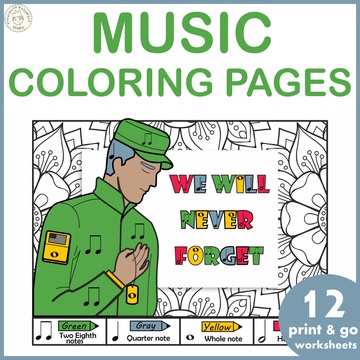
10. Veterans Day Coloring and Listening Activity
A coloring page can be more than a time-filler when you pair it with listening.
Choose a patriotic or Veterans Day music coloring page and play a short excerpt of ceremonial or patriotic music while students work. Before they begin, give them one listening job.
Ask students to listen for:
- steady beat
- brass instruments
- drums
- loud and soft sections
- repeated melodies
- a mood word
After the excerpt, students share one thing they heard. Then they can continue coloring while the music plays again.
This works well for younger students, sub plans, early finishers, or a calmer Veterans Day lesson. It also helps when you need a respectful activity that does not require complex setup.
Tips for Teaching Veterans Day in the Music Classroom
Keep the tone respectful
Students can create and move, but the mood should fit the topic. Avoid turning Veterans Day into a loud party activity.
Use age-appropriate language
You can talk about service, courage, teamwork, sacrifice, gratitude, and community without giving young students more detail than they need.
Give one clear task
Veterans Day lessons work best when students know exactly what to listen for or create. Choose rhythm, mood, dynamics, melody, or instrumentation. Do not ask them to track too many things at once.
Save your templates
If you create a listening chart, checklist, rhythm page, or project outline, save it for next year. Having a ready-to-use structure saves time when the holiday comes around again.
Final Thoughts
Veterans Day music activities can help students listen, create, and show gratitude with care.
You can build a full lesson from a sound collage, cadence activity, music history discussion, virtual band tour, or musical letter. You can also keep it simple with a coloring page and one focused listening prompt.
Start with one activity, one clear musical goal, and a respectful tone. That is enough for a meaningful Veterans Day music classroom lesson.
Tags:
Fall Music Worksheets