10 Practical Ways to Teach Children to Sing Safely and Naturally
· Updated
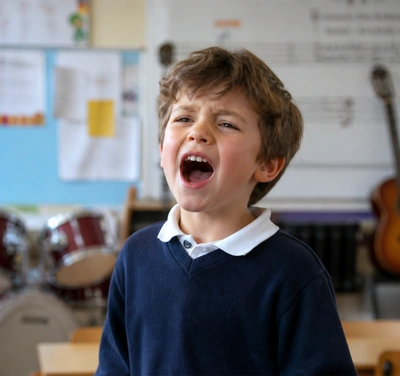
Teaching children to sing is not the same as pressing play and asking the class to copy the track.
The way you teach the song matters as much as the song itself.
Young voices are still growing. Children’s vocal folds are smaller and lighter than adult vocal folds, so we do not want them forcing a big, heavy, grown-up sound. The goal is a light, easy singing voice that feels comfortable and free.
I also try to keep singing work practical. If I can save five minutes, avoid one more explanation, or make the routine easier for the next class, I will. These are the singing strategies I come back to in my music room.
1. Keep Vocal Warm-Ups Short
Children do not need a ten-minute warm-up before every song. Most of the time, two or three minutes of vocal play works better.
Try a quick sequence:
- three-note echo: “loo-loo-loo”
- descending pattern: “oo-oo-oo”
- one short phrase from the song you plan to teach
Then move on.
You can always come back to another quick warm-up later in the lesson. Stop while students still have energy. That gives you more focus for the actual singing.
2. Sing First and Let Children Echo You
Children learn singing by hearing a clear model.
Skip the long explanation at first. Sing a short phrase and let them echo it.
Teacher: “Good morning, everyone!”
Students: “Good morning, everyone!”
With kindergarten and first grade, turn it into a singing conversation.
Teacher: “What is your name?”
Student: “My name is Anna!”
It feels like play, but students work on pitch, diction, breath, and tone at the same time. Show the sound first. Explain after they have something to copy.
3. Use Light Descending Patterns
Children often copy pop-style singing and try to belt from the throat. A light descending pattern can help them reset.
Sing from high to low with an easy sound:
- “oo-oo-oo”
- “loo-loo-loo”
For younger students, use an image.
“Sing like a small owl.”
That image works faster than a vocal mechanics lecture. If a child brings a heavy, pushed sound into class, descending slides can help them find a lighter voice again.
4. Find the Vowel That Works
Children do not sing every vowel with the same ease.
One student may sound relaxed on “oo” and tight on “ah.” Another may sing “oh” with no problem and then shout the next vowel.
Start with the vowel that works.
Try this:
“oo” → “oh” → “ah”
Keep the same easy feeling as the vowel changes. If the sound gets heavy, go back to the vowel that felt comfortable and try again.
5. Speak the Words Before You Sing Them
When a song sounds messy, the problem may be the text.
Children trip over words, then the singing falls apart. Stop singing for a moment and work with the lyrics.
Speak the words. Speak them in rhythm. Clap the rhythm. Whisper the text. Read it like actors.
Try saying:
“Say this like a secret.”
Then sing the phrase again.
Diction often clears up right away because students know where the words go.
6. Teach Breathing Through the Phrase
Telling a young child to “support the sound” usually does not help.
Give them a phrase goal instead.
Ask:
“Can you sing all the way to this word?”
Mark the landing word with your finger or on the board. Then have students sing the phrase and aim their breath toward that spot.
You can also use movement. Have students trace the phrase in the air while they sing. The line helps them feel that the breath keeps moving until the phrase ends.
7. Keep the Volume Comfortable
Loud singing does not mean healthy singing.
Children may think they are doing a better job when they sing louder, especially in a large group. I remind students that we want singing voices, not shouting voices.
Use simple volume cues:
- “Use your classroom singing voice.”
- “Sing like the sound is floating.”
- “Keep the sound easy.”
- “No playground voices.”
If the class gets too loud, lower your own model. Students often match the teacher’s energy and volume.
8. Use Vocal Exploration, But Make It Feel Cool
Vocal exploration works well when students buy into it.
Younger students may love animal sounds and silly slides. Older elementary students sometimes need a stronger image. I have had better results with characters and challenges that do not feel like “baby” work.
Use sounds like:
- owl slides
- ghost sounds
- sirens
- witch voices
- spider web pitch paths
Give them a challenge: fast up and down, a tricky shape, or a pattern they have to follow with their finger. Those harder vocal explorations help students find head voice and make the work feel like a real task.
Do not use the same type of vocal exploration every class. Save it so students still take it seriously.
9. Watch for Strain
Children will not always tell you when singing feels uncomfortable. You have to watch their bodies.
Look for:
- raised shoulders
- tight jaw
- red face
- pushing the neck forward
- shouting instead of singing
- breathy, tired sound
If you see strain, stop and reset.
Go back to a light “oo.” Use a descending slide. Lower the volume. Speak the text. Shorten the phrase.
A small reset protects the voice and keeps the child from practicing a forced habit.
10. Teach the Song in Small Pieces
A whole song can overwhelm young singers.
Teach one phrase at a time. Sing, echo, speak, sing again. Then connect two phrases.
This saves time because students do not have to guess their way through the whole song. They know exactly which part they are learning.
A simple pattern works well:
- Teacher sings the phrase.
- Students echo.
- Students speak the words in rhythm.
- Students sing again.
- Teacher adds the next phrase.
If a section falls apart, isolate it. Fix the small part before running the whole song again.
Final Thoughts
Children can sing safely when we keep the work light, short, and clear.
Start with a good model. Use echo singing. Choose easy vowels. Speak tricky text. Keep the volume comfortable. Add vocal exploration that feels fun without turning into fluff.
The goal is not a loud class. The goal is a room full of children using healthy, natural singing voices with confidence.
Please note: The illustrations featured in this article were created with the assistance of AI.
Tags: